Moss Terraria: Portals into the Biosphere
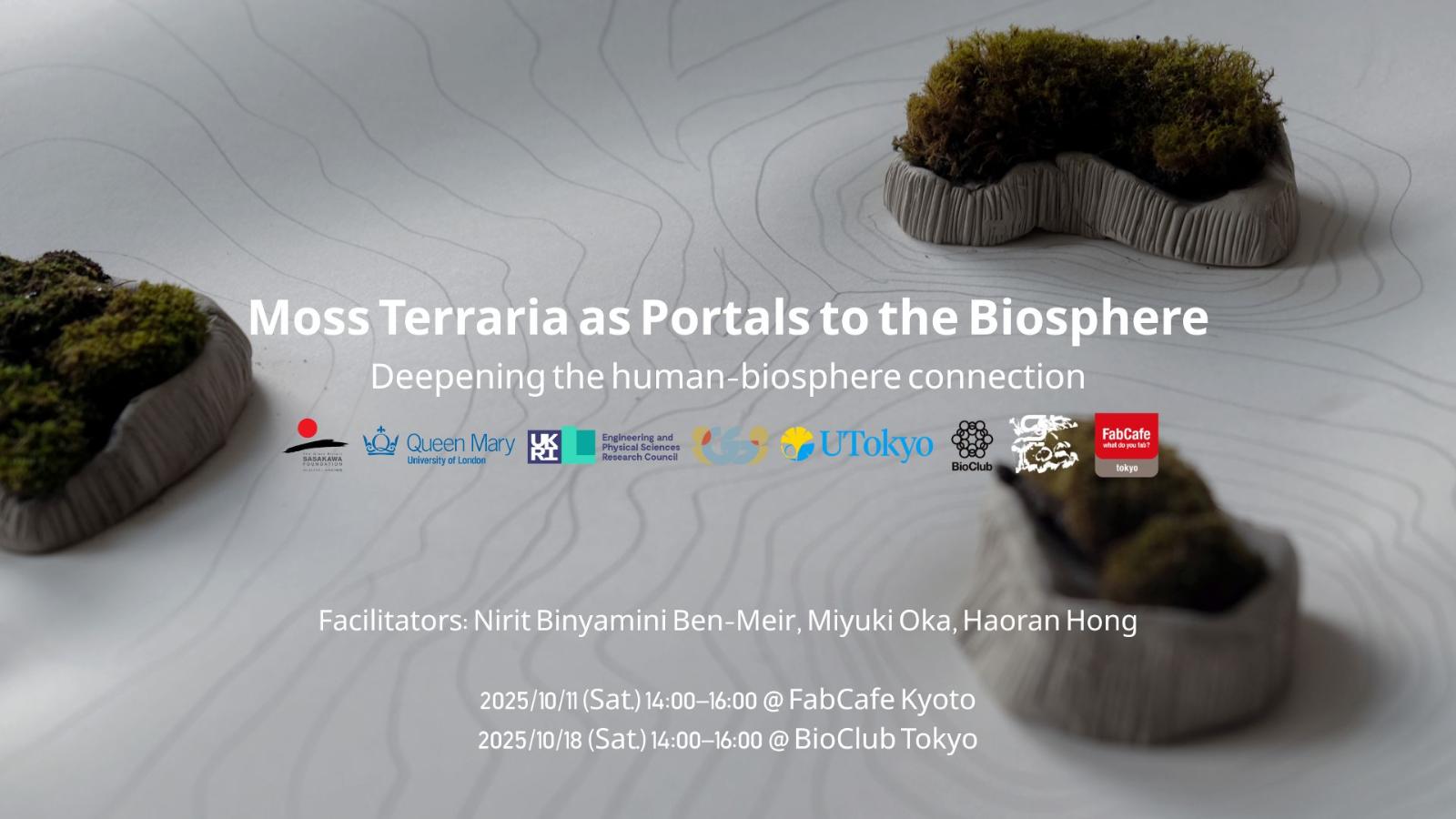
Using technology to explore interspecies awareness and care
This workshop invites people to explore the world of mosses and how the integration of moss plants into interactive artefacts and experiences could promote ecological awareness and connection to the biosphere. Mosses are incredibly resilient plants, and have a unique ability to adapt to changes in their environment. Together, we will explore how technological tools, visual and sound design can amplify the subtle responses of mosses, making them more perceptible to human senses. We will imagine, sketch and discuss ideas for how these interactions could be integrated into domestic daily routines, to support people’s awareness to the biosphere and to create communities of care. Through this process, we aim to cultivate a deeper human–plant connection and offer fresh perspectives on the interplay between nature, technology, and humanity.
What we'll do
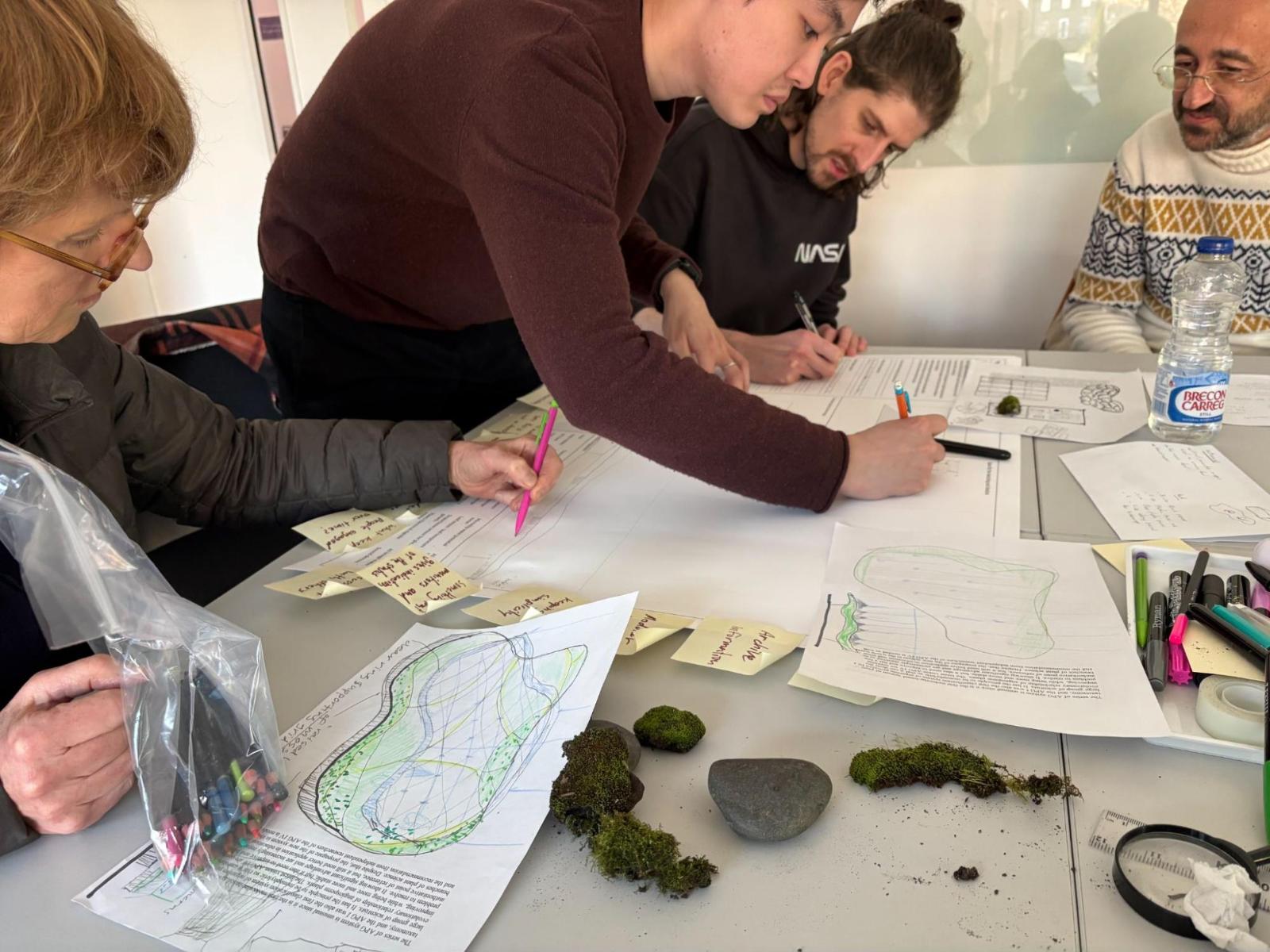
Participants will have the chance to enhance their understanding of mosses, learn about their unique characteristics and how they relate to ecological thinking. We will engage in hands-on experiments where we look closely at moss before coupling moss plants with digital tools.
Work in collaboration with other participants to imagine, sketch and exchange ideas about how a network of moss terraria could enhance communities of ecological care. We hope to co-create some inspiring and interesting ideas that may feed into future development of prototypes, artworks and research tools. This is an opportunity to contribute from your perspective, ideas and experience and be involved in an exploratory creative process.
Sign up
Sign up here.
Recommended for...
We invite participants that are interested in how design with living plants and ecosystems can support care for the biosphere and for other human and non-human living beings. We welcome anyone curious about the combination of augmentation technologies, ecological care, plants and communication design.
No previous experience, skills or background is needed, however, we expect that this workshop would particularly be of interest to the following: academics, educators, ecologists, designers, anthropologists, architects, people working with plants and other species, biodesign, slow and ambient technology and information technology.
The workshop is part of an academic research project for adult participants (18 and over).
Notice
- This event will be conducted in English with Japanese support.
- No particular experience or background is required — all are welcome.
- If the number of registrations is too high, participation may be determined by a lottery system.
- Photo and video of participants may be used on the FabCafe/Loftwork websites, or in future research publications by the facilitation team.
- Program and content subject to change without notice.
Facilitators
Nirit Binyamini Ben-Meir
Artist, Designer & Researcher, doing her PhD at iGGi – Intelligent Games, Game Intelligence at QMUL, exploring More-Than-Human Interactions. Nirit’s research focuses on how the integration of living plants into digital interactions may influence people’s engagement with ecological stewardship, through the shaping of domestic cultures of plant care. Nirit is a tutor at IED RCA, she was awarded the GBSF grant (2025), DIS25 best paper, her performative installations were presented in various galleries in London and was a winning finalist at the YouFab Global Creative Award (2021) Tokyo.
Miyuki Oka
Her practice explores the relationships between place, time, knowledge, and the body through processes of transformation and reconfiguration of information. She was awarded the WIRED Creative Hack Award (2021) and STRP Award for Creative Technology (2020). Her works have been presented in transdisciplinary platforms, including Theater der Welt (2024) and programs at the Botanical Garden of Rome (2022).
Haoran Hong
A PhD student at Graduate School of Frontier Sciences, the University of Tokyo. Hong’s studies explore interaction technology, especially Animal-Computer Interaction (ACI). His studies integrate IoT and digital arts and aim to establish connections for human societies and nature environments. Hong was awarded the University of Tokyo Fellowship. With continued efforts on interdisciplinary research, his works were presented in the field of animal-centered design (2024), human factor engineering (2025, 2023), and virtual reality (2021). For promoting eco-friendly awareness and heritage protection, he produced interactive art showcased at Kulangsu Island (2021), Sandao Gallery (2021), and Jiahe Gallery (2020) in Xiamen, China.


